1. The Core Announcement & Facts
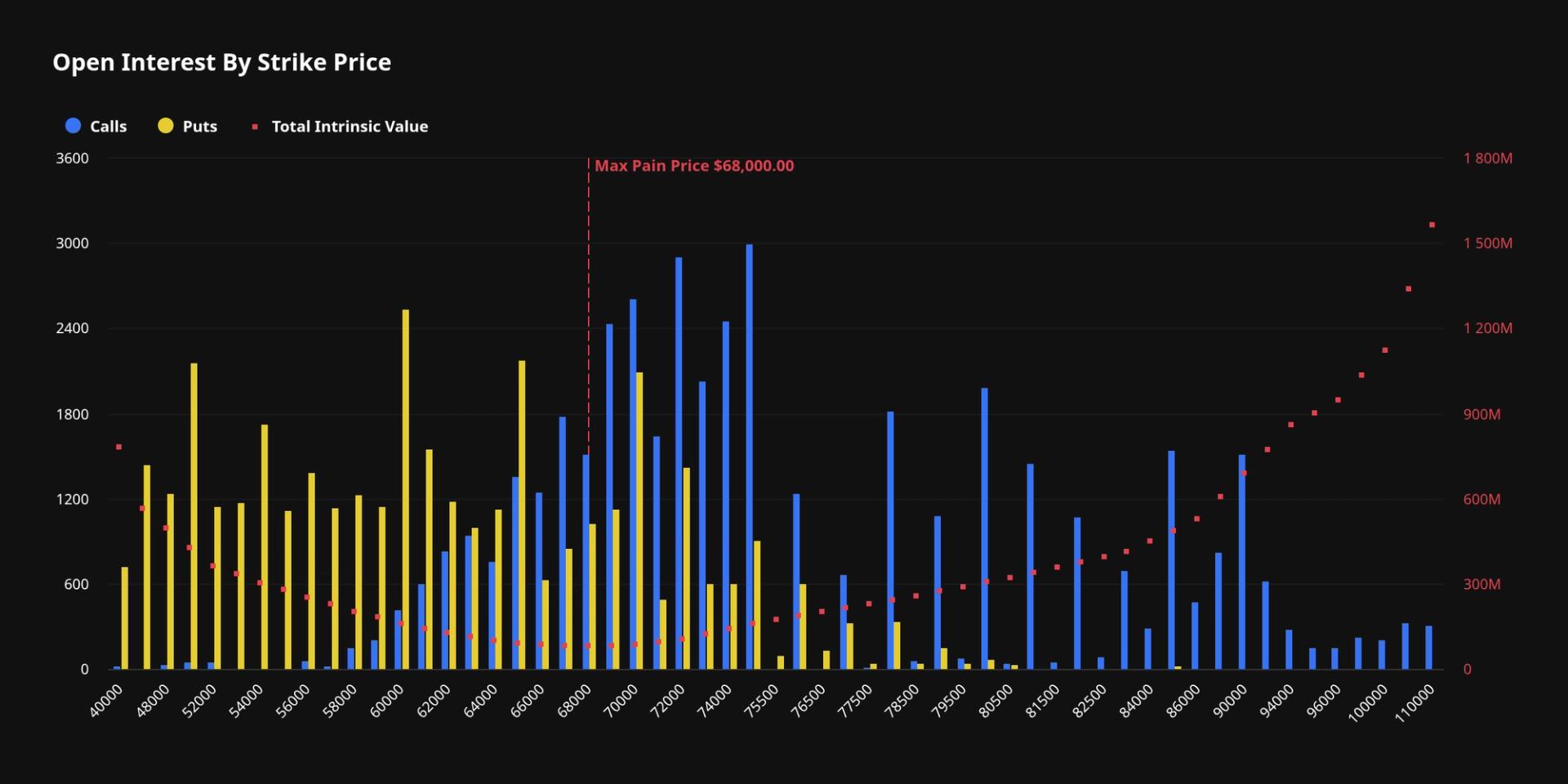
A massive $6.4 billion Bitcoin options expiry scheduled for this Friday is preparing to impact digital asset liquidity, according to market reports published by CoinDesk FinTech & AI on August 25, 2026. Representing one of the significant derivatives settlement events of the quarter, the upcoming expiration has drawn concentrated attention from institutional desks, quantitative funds, and market makers.
With billions of dollars in nominal contract value set to settle simultaneously, derivatives venues and centralized exchanges are expected to experience elevated trading volume and potential order book imbalances. Market watchers are closely tracking strike distribution across major option exchanges to anticipate potential inflection points for spot price action leading into Friday's deadline.
2. Market & Industry Impact
Options expirations of this magnitude exert significant macroeconomic and structural influence over the broader digital asset ecosystem. As institutional participation in crypto options market structure has matured, settlement events increasingly influence short-term spot market liquidity, perpetual futures funding rates, and cross-market spread dynamics.
Prior to settlement, derivative positioning often creates a 'pinning' effect where spot prices gravitate toward key strike concentrations. However, once the $6.4 billion in contracts settles, locked collateral is unpinned and freed back into trading accounts. This structural reset historically triggers rapid portfolio rebalancing and directional momentum shifts across both centralized spot exchanges and decentralized finance (DeFi) venues.
3. Technical Analysis & Architecture
Mechanically, options market volatility around expiration is largely dictated by dealer delta and gamma exposure. Institutional liquidity providers who sell options contracts maintain delta-neutral portfolios by continuously buying or selling the underlying asset—in this case, spot Bitcoin or linear futures contracts—as prices fluctuate relative to key option strikes.
When dealers are positioned short gamma near active strike clusters, their risk-management algorithms must aggressively trade in the direction of spot price moves—buying as prices rise and selling as prices fall. This automated delta-hedging mechanism can magnify spot volatility in the final hours leading up to contract expiry. Once settlement completes on Friday, these structural hedging obligations immediately clear, allowing underlying market demand and organic spot order flow to re-establish true price discovery.