1. The Core Announcement & Facts
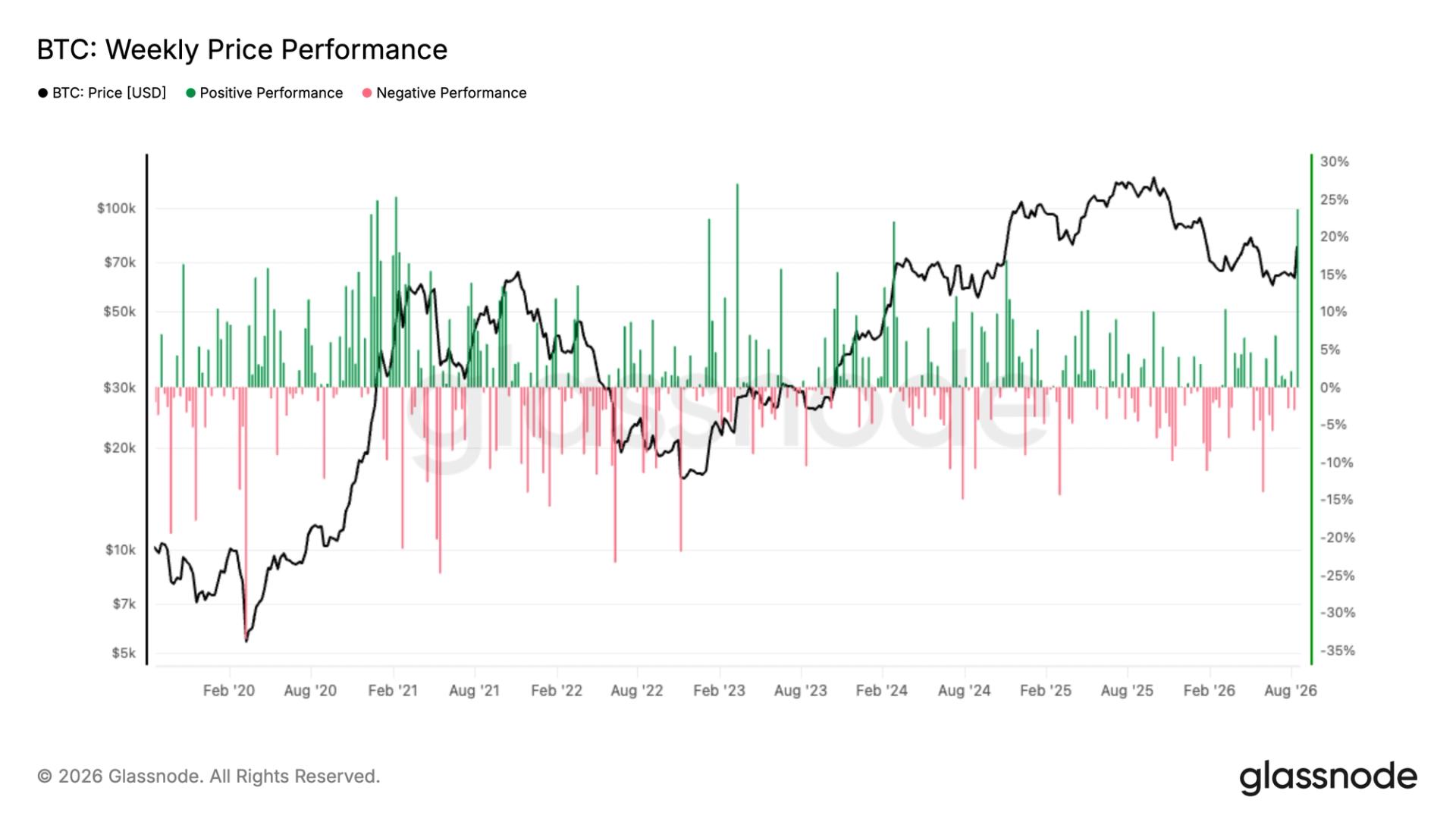
In a major development reported by CoinDesk FinTech & AI on August 24, 2026, the digital asset market experienced a dramatic resurgence, headlined by Bitcoin achieving its second-best weekly gain since the historic bull run of early 2021. The sudden price appreciation ended weeks of consolidation, triggering widespread short squeezes across major derivatives platforms and driving elevated spot volumes globally.
The sustained weekly breakout was propelled by concentrated buying pressure from institutional market participants and systematic trading desks. Market indicators showed elevated buy-side liquidity across major USD and stablecoin trading pairs, re-establishing Bitcoin as a primary vehicle for capital deployment within the broader digital financial ecosystem.
2. Market & Industry Impact
From a macroeconomic perspective, this historic weekly run reflects a broader shift in institutional risk tolerance and liquidity conditions. As central banking policies and interest rate expectations evolve through late 2026, institutional asset managers have increasingly re-engaged with liquid alternative assets. Spot ETF flows, institutional custody expansion, and renewed enterprise interest in digital asset treasury management have provided a structural floor for this market expansion.
The valuation surge extends beyond spot pricing, positively impacting crypto mining economics, digital asset infrastructure providers, and Web3 enterprise services. Increased transaction fee revenue and higher asset valuations improve operating margins across public mining operators and institutional prime brokerage desks, though regulatory scrutiny regarding leverage limits and execution transparency remains sharp in key global markets.
3. Technical Analysis & Architecture
Technically, the Bitcoin blockchain and interconnected off-chain financial rails managed the heightened volatility and record transaction volume with high efficiency. On-chain metrics during the surge revealed a notable expansion in active wallet addresses and mempool transaction density, while average settlement latency remained stable within standard block intervals. Mining network hash rates held near historical highs, ensuring robust proof-of-work security despite surging difficulty adjustments.
In the market architecture domain, centralized matching engines and decentralized exchange automated market makers (AMMs) demonstrated improved resilience compared to prior multi-year cycles. Reduced order book slippage and expanded depth across tick levels facilitated high-throughput algorithmic trading strategies, proving that recent investments in low-latency API infrastructure and institutional clearing mechanisms have successfully bolstered market structure resilience under high-volatility conditions.