1. The Core Announcement & Facts
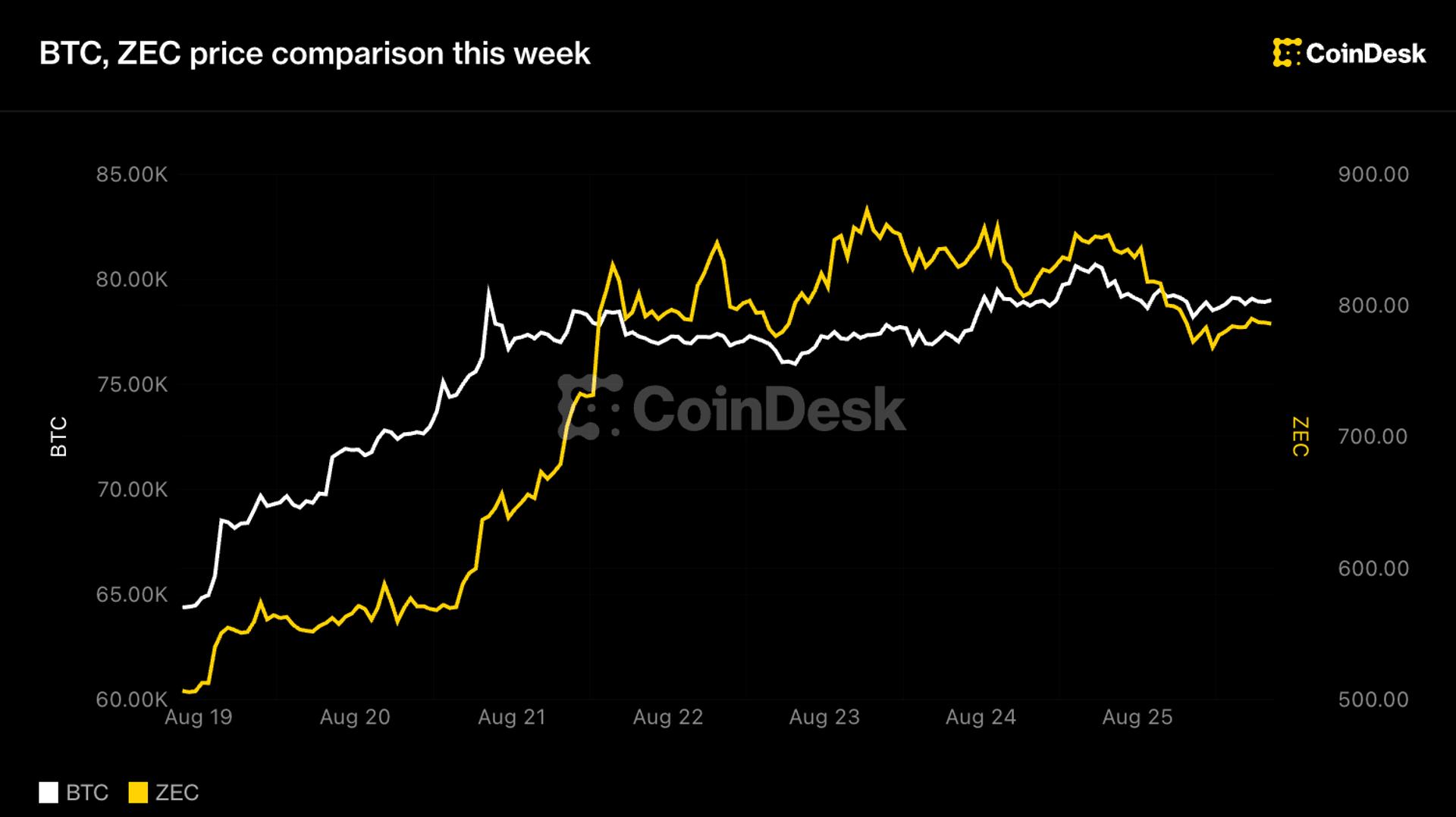
On August 26, 2026, Zcash (ZEC) experienced an immediate 8% price correction as Grayscale's long-anticipated Zcash ETF officially went live for public trading. The debut marked the climax of an aggressive 60% rally in ZEC spot markets, as institutional traders and speculative retail capital priced in the arrival of a regulated financial wrapper for the privacy-centric protocol.
According to market data reported by CoinDesk FinTech & AI, the pullback exemplifies traditional market mechanics where pre-event speculative buying gives way to profit-taking upon product activation. Despite the immediate spot price contraction, the launch of Grayscale's vehicle represents an important structural transition for privacy coins, establishing a direct channel between traditional capital markets and zero-knowledge cryptographic assets.
2. Market & Industry Impact
From a macroeconomic and market structure perspective, the introduction of a Grayscale investment vehicle for Zcash highlights an evolving posture among institutional asset managers regarding privacy-focused protocols. While regulatory scrutiny around anonymous transactions remains high globally, the establishment of regulated investment funds provides institutional portfolios with compliant exposure without requiring direct custody of underlying keys.
The sell-the-news phenomenon observed during the ETF debut reflects broader liquidity shifts across digital asset markets. As capital flows shift from spot accumulation to derivative hedging and fund-level rebalancing, market participants expect short-term volatility to compress. Longer-term valuation impacts will largely depend on net secondary market inflows into the ETF vehicle relative to supply dynamics on native Zcash exchanges.
3. Technical Analysis & Architecture
At a technical architecture level, Zcash differentiates itself from conventional public ledger blockchains through its implementation of advanced zero-knowledge cryptography, specifically zero-knowledge succinct non-interactive arguments of knowledge (zk-SNARKs). The protocol utilizes shielded address pools—such as the Sapling and Orchard upgrades—allowing sender, receiver, and transaction amounts to remain fully encrypted while still validating transaction legitimacy on a decentralized ledger.
The engineering challenge for institutional wrappers involves bridging transparent settlement infrastructure with encrypted protocol mechanics. While the underlying Zcash network supports both transparent (t-addresses) and shielded (z-addresses) transactions, fund custodians typically manage custody utilizing rigorous multisig setups and transparent transaction pathways to satisfy audit and Anti-Money Laundering (AML) reporting constraints. The deployment of the Grayscale product underscores how custodians navigate these computational and compliance boundaries without compromising protocol integrity.