1. The Core Announcement & Facts
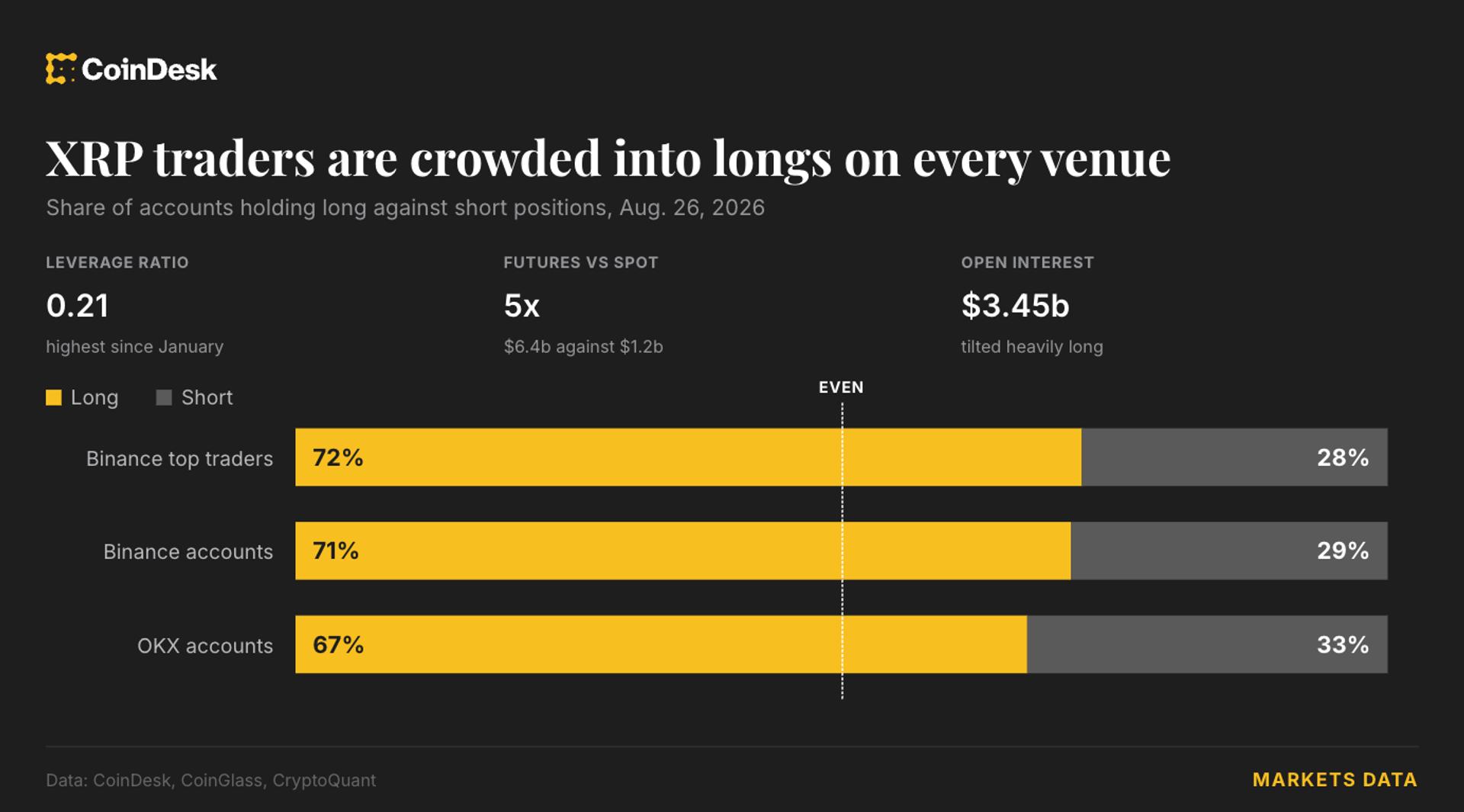
A dramatic 44% price rally in XRP has brought speculative leverage back to the forefront of digital asset markets, according to analysis published by CoinDesk. As trading activity escalated alongside the upward momentum, market participants rapidly expanded open interest across global derivatives platforms, signaling renewed appetite for leveraged exposure.
However, the rapid influx of leveraged positions introduces substantial structural fragility into XRP's market architecture. When sudden price expansions are primarily fueled by derivative leverage rather than sustained spot market accumulation, the vulnerability to high-magnitude price retracements rises significantly as liquidation cascades become a constant threat.
2. Market & Industry Impact
From a market structure perspective, the return of elevated leverage during rapid price rallies underscores the persistent liquidity dynamics governing altcoin markets. Institutional traders and quantitative desks closely monitor derivative open interest metrics and relative funding rates as leading indicators of market overheating and systemic risk.
A heavily leveraged market environment leaves price action susceptible to sudden deleveraging events. Should XRP breach local technical support thresholds, forced liquidations of long positions could rapidly accelerate sell-off momentum, eroding order book bid depth and introducing spillover volatility across related crypto asset markets.
3. Technical Analysis & Architecture
From a market engineering and algorithmic architecture standpoint, the mechanics of rapid leverage accumulation center on perpetual futures contracts and dynamic margin management systems. Perpetual swaps rely on periodic funding rate balances—exchanged between long and short position holders—to keep contract prices tethered to underlying spot index values.
When aggressive market buying pushes funding rates higher, automated liquidation engines on centralized exchanges and decentralized protocols increase monitoring of maintenance margin ratios. Under high-leverage scenarios, small adverse price movements can instantly trigger automated margin calls and market orders, causing liquidations to sweep through order books and amplify short-term downside momentum.